Stephanie Howard
Creative Nonfiction Winner
This, like many things, is a story about love, laid bare in all its great and terrible power. It is also a sordid family history, a glorified diary entry, and something that I have struggled to put into words for many years because of the number of precise details and backward loops it requires. I’ve considered this story’s moving parts, its facts and half-truths, and where to begin it all. Do I begin at the beginning? In medias res, like a real auteur? Of course, I could start nowhere at all and never write about this, continuing to let it fester in a cardboard box in my closet until it grows moldy and the mice have made a better home in it than I ever could.
The easiest place to start would be at the University of Montana in 1957, in the fog-covered fishbowl known as the Missoula Valley where my grandparents met. My biological grandfather (the adjective will be important later), Kenneth, was a young man from Helena with a talent for basketball. He had been about to go professional when a knee injury crushed that dream and sent him down a path toward studying psychology. My grandmother, Mary Beth, grew up on a ranch in Three Forks and was attending college to become a nurse. It was a perfect nineteen-fifties love story, if you ignored the fact that Mary Beth was white and Kenneth was Black.
While my grandparents’ romance may stand as a testament against the societal structures of a pre-Civil Rights Movement America, their marriage only lasted thirteen years. They had four sons, and moved often for my grandfather’s job as a school counselor, first to Canada, then a brief return to Montana, then the Midwest, before divorcing in 1970. This was no matter. Ken pursued graduate education, becoming a professor of psychology at the University of Northern Colorado, and then taking a post at San Diego State. Mary Beth, meanwhile, remained in Montana with her four sons, blond like her, but with Kenneth’s tall, scrawny height and curly hair. Two years after her divorce, Mary Beth married a man named Steve Howell, whom she’d met at Bozeman Deaconess Hospital after a near-fatal car crash brought her right to his side as his nurse.
For much of my early life, Mary Beth and Steve were the only of my father’s parents I knew of, and I had no evidence to the contrary. Sure, Steve was entirely European in appearance, while my father, and by extension, his children, had an undefinably ambiguous racial presentation, but I was quite young and had little to no understanding of race or biology at the time. And sure, my family’s last name was Howard, and Steve’s was Howell, but this fact never crossed my mind, not even when my father would meet Steve as he dropped us off at his and Mary Beth’s house in Bozeman, calling out, “Hey, Howell!” as a greeting. All of these were simply facts of life for me.
Nobody does secrets like my family. They’ll keep something so close to the chest, they forget they’re even keeping anything there. Then, if the timing’s right, when someone starts excavating, asking questions, they’ll tell you anything you want to know, like there was nothing to hide to begin with. The trick about this is, you have to know what to ask.
The timer hit zero in 2009. I was seven when Mary Beth died, preceded in death by three of her four sons. She was the first dead person I knew, and her death pulled out the nails that had been keeping the nature of our family’s existence boarded up and shuttered. A year later, my third-grade class had a genealogy project, which was as in-depth as asking our parents about our ethnic backgrounds and presenting a list to the class. I asked my mother, a well-spring of information when she wanted to be, and with Mary Beth no longer around for anyone to worry how she’d feel about the truth being drudged up from her memories, my mother told it simply.
“Well, my family is Irish, German, Austrian, and Hungarian. My dad’s half Irish, half German; my mom’s half Austrian, half Hungarian. I don’t know exactly about your dad, however. I’m pretty sure his mom was Scottish, and his dad was African.”
“Grandpa Steve?”
“No, not Grandpa Steve. Before Grandma Beth was married to Grandpa Steve, she was married to your Grandpa Ken. Grandpa Ken is your dad’s dad.”
Nobody does secrets like my family. They’ll keep something so close to the chest, they forget they’re even keeping anything there.
In a different family, this might have been an earth-shattering revelation. But we saw my father’s ex-wife every year at Thanksgiving, my grandmother was dead and Steve had become more and more reclusive since her passing, and anything that could have shocked was instead only clarifying. Ah, I thought. Things make more sense now.
Kenneth’s existence and relation to me was nothing more than a statement of fact, the way my mother had explained it, until the fifth grade, when my eldest half-sister graduated college. My father had followed in the family tradition of getting married too young and subsequently divorcing, leaving me with two half-sisters who had their own strange and mysterious family. Any parties that revolved around one of my half-sisters were strange to me, rooms filled with people I wasn’t quite related to. So when an elderly man approached me in the hallway by the kitchen at the elder’s graduation party, I didn’t think anything of it. He was simply one of the people who were part of my half-sisters’ family and not mine.
He was tall, the tallest in the room even as he stooped with age. His dark skin was sallow, close to the bone and purpling in the hollows of his face. An oxygen tube ran across his cheeks and over his shoulders, disappearing into a rolling bag on the floor next to him that hummed and whirred softly, a whisper beneath the chatter of the room. His hair was white and tufty, and as I looked at him, I couldn’t figure out why he was looking at me so intently, or why he was so familiar.
My mother rematerialized by my side, bringing my younger brother with her. “Steph, Nick, this is your Grandpa Ken, your dad’s dad. Ken, meet your grandchildren.”
Meeting my biological grandfather for the first time was a puzzling experience. He was kind, struggling to speak. I only met him the once, though after the first encounter, he had phone calls with my brother and me a few times. More than anything, I remember his voice. He spoke softly, and it seemed to be his natural volume, even with the oxygen and lung cancer to contend with. His voice was rich, like coffee with enough creamer to thicken the mug, the same light but distinctly masculine pitch my father had. He died two years later. His funeral was the second time I saw him.
Something about our first and only meeting caught on the back of my mind for years afterward: Why had he been at my sister’s graduation party? Why there, and never anywhere else? Learning the answer to this question took years.
When I was fifteen, my family moved from one small town, Belgrade, to an even smaller one, Three Forks. We’d been in the same house, a trailer home on the outskirts of town, since I was six, and I’d never realized the sheer volume of stuff my parents, brother, and I had between us. Particularly my mother, who’d keep a piece of chewed gum if it had enough sentimental value, which to her was anything at all. In the process of moving, my mother decided to downsize her collection from gigantic to just huge. Now that I was older and could be trusted with things, she gave me a box of stuff she’d saved on my behalf.
In that box was every card that had ever been addressed to me. I enjoyed going through them, reading old well-wishes from aunts and my parents writing more and more on each birthday until I got to a lump of cards held together with a rubber band at the very bottom.
Every single one of these cards was from Kenneth. From the time I was born until I was four years old, I had around twenty cards from him, some from birthdays, some from Christmas, some from a random Tuesday when he decided to write to his youngest granddaughter he’d never met. In one, from April of 2007, when I was not yet five years old, he’d written, “If you’re having trouble reading this, get one of your sisters to read it to you.” My sisters had never lived in the same house as me, as per the custody arrangement my father had with his ex-wife, but it tickled me nonetheless. I bawled like a baby after the first card. This man had loved me so much he’d written over the entire insides and the backs of cards before I could even read, and yet he had only met me once, his very existence a mystery until long after he’d stopped writing, sensing the futility when my parents never sent him any reply. On the envelopes, because my mother kept those as well, I laughed seeing he’d spelled my name, Stephanie, right, but couldn’t get my mother’s much simpler name, Patty, correct. On every envelope, he’d spelled it “Patti.”
Most people can’t remember the first time they experienced love. Hopefully, this is because the majority had their first brush before they were capable of cognizant thought and not because everyone is still waiting for it. I, myself, have no recollection of that very, very first time, on account of being a newborn, and this appears to be the common experience. Like most people, I don’t remember the first time love touched its hand on me. Unlike most people, I can remember when that hand laid its hardest, its heaviest, so much I thought I might give way under it. It was reading those cards, mourning the relationship I’d never gotten to have with that man, my biological grandfather.
He’d been in my half-sisters’ lives, I knew that. His name had never come up until the first time I met him, and then suddenly, people wanted to talk about Kenneth. When my half-sisters would babysit me, it felt like I’d walked into a parallel world hearing them reminisce about the days they spent with him when they were little, a decade before I had been born, about the treats he’d buy them, and how much fun they had with him and his adopted daughter. The man’s existence hadn’t so much as been alluded to before my mother clued me in, then overnight he’d been uncensored from our family tree.
Why, I asked myself, why were they allowed to know him, but I wasn’t?
This is the second-to-last family secret that’s part of telling this story. In a narrative about my father’s father, the link between Kenneth and me has been noticeably absent. My father and I are alike in many ways, often to the detriment of our relationship with each other. My father’s the kind of person who will only offer up information in an interrogation, and I’m the kind of person who doesn’t ask questions. We both regard the other as a friendly ghost that’s taken up residence in our house, haunting each other, but never moving enough furniture to warrant a séance. Everything I know about my father has been told to me by mediums, either my mother, who’s had the luxury of time to pry things out of him, or my brother, who doesn’t believe in shame or small talk.
After one of my brother’s cross-examining sessions, he dutifully reported the following back to me: when my father was fifteen years old, he had sex with some girl in a janitor’s closet at his high school, and nine months later, his first son was born. The baby was given up for adoption, and as punishment, my father was sent to live with Kenneth at his home in San Diego. My father has never elaborated on the year and a half he lived in California since this information was first divested.
Ever since Kenneth and Mary Beth divorced, back in 1970 when my father was nine, my father had not been close with his father. Getting sent to San Diego was the worst possible punishment for him. As it goes, the reason my grandparents got divorced was long nights filled with screaming, my father going to bed hungry for speaking out of turn, and large black bruises on my grandmother’s face and arms. Despite all of this and whatever happened in California to my father, out of some sense of filial obligation and piety, Kenneth was still a part of my father’s life, able to see and visit and babysit my two half-sisters. Despite all that had happened, my father had enough capacity to forgive Kenneth and give him the gift of a relationship with his grandchildren that he had ruined with each of his four sons. Kenneth would destroy this gift.
When I was eighteen and had come home over winter break between college semesters, I brought up the cards to my mother. I held one, the envelope swaddled around it, and presented it to her like evidence.
She looked at her name misspelled on the envelope and laughed. “I’ll never understand that man.”
“How do you mean?”
She pointed at the date on the postage. “He wrote you all of these before you could even read. What kind of act is that? Trying to act all kind and broken-hearted after everything. He was just trying to play it up to get you to like him. He’s lucky that I even saved them. Who writes cards to a two-year-old?”
“I think they’re sweet. He told me to get someone to read it to me if I was having trouble.”
She tapped at her misspelled name. “Stephanie, sweetie, he can’t even get my name right. It’s all surface-level. It’s all an act. No matter how many times he’d seen me or spoken to me, he couldn’t get my name right. And he didn’t keep writing.”
“Isn’t that because you and Dad stopped him? Or didn’t send anything back?” My mother laughed. “We wrote back every time! He’s the one who stopped. He was just trying to get back at your dad.”
This confused me. “Get back at him for what?” I asked.
My mother breathed in one of her world-weary sighs and explained to me, simply, like I was a child with a genealogy project.
“When your father got divorced, he and Bonita were going to split custody. Your Grandpa Ken didn’t like that. He told your father he needed to get full custody of your sisters. Your father said no, and Ken decided to take it into his own hands.” She sat down at this point. “Ken had more money than your dad. He got an attorney and sued for custody. He spun some yarn about how your father was abusive and mistreating them, how they’d be better in his hands than with their father. It was funny since all the stuff he was saying your dad did to your sisters was what he’d done to your dad and his brothers. Your dad was eventually able to disprove it, but things between your dad and Ken were never the same after that.”
When I went back to my room, the card felt heavy in my hands. I stuffed it back in its box where the rest of them lay, tucked it away in the closet, and shut the door, unable to stand the sight of them. What my mother had told me about my father’s divorce, what she had all but said outright about why I hadn’t been allowed to see Grandpa Ken as a child but my half-sisters had threatened to choke me. They weren’t denying me anything. They were scared he’d try to take me away.
I don’t know how to feel about my biological grandfather these days. When people ask, I always say I have five grandparents; my mother’s parents, and my father’s: Mary Beth, Steve, and Kenneth. I always feel the need to qualify. Kenneth is my biological grandfather, and while Steve is my father’s stepfather, he’s always been just a grandfather to me.
It feels wrong to pass judgment on Kenneth. I only met the man once. Like my father, everything I know about him, I’ve learned secondhand. Hell, most of what I know about him is from his obituary that he wrote himself while he was wasting away in hospice, and the rest is what my mother and brother have wrestled out of conversations with my father over the years, and then reported back to me.
From his obituary, I learned that Kenneth Stump Howard first entered hospice in 2006, the same year the cards stopped coming. I learned that he graduated a year later, and was able to live at home until July 2012, when he re-entered hospice, a month after our first and only meeting. He wrote the story of his life, from his early childhood and teen years. He had a younger sister, whom he adored. His father got less written about him than his mother, and both of them had less written about them than Kenneth’s stepmother. He wrote about his own grandparents, a former slave and a Civil War vet, who was the first in our family to settle in Montana. I learned that as a kid, he collected scrap metal from around town to donate to the war effort during World War II, that the papers wrote about his basketball games and called him a very slender, promising young Negro. He wrote my grandmother’s name as Marybeth, all one word, but for once, spelled my mother’s name right.
His obituary is touching. It’s written jovially, a dying man fondly remembering his life and family. The love he has for his parents, his children, his second wife spills out from the funeral home’s website. I hate reading it, and yet I find myself typing his name into the search bar once a year, trying to understand who on Earth this man was, who he is to me.
On a simple level, he is and will always be my biological grandfather, and nothing more. One meeting and twenty cards do not a relationship make. But it feels wrong, dismissive to try to file him away so neatly, to tie a rubber band around him and accept him as part of my genetic structure and leave it at that. If Kenneth’s name comes up, my father will get a sour look on his face and leave the room. My half-sisters, despite it all, think he hung the moon.
Every year, when I find myself rereading his obituary and coming close to forgiving him, I come back to that feeling of ultimate, unquestionable love I felt reading those cards, then the awful snap on the bungee cord as I fell into a ravine of family history, forced to rewrite each word until it came not from a lonely grandfather, but from a spiteful, manipulative man taking vengeance on his only living son.
I keep a box in my closet filled with keepsakes and mementos, birthday cards and old dog collars, keychains from people I no longer talk to, softball medals, and old report cards. At the bottom of the box, still rubberbanded along with their envelopes, is my collection of cards from that man. My father calls him Ken Howard, like if he says the full name, he can pretend we’re talking about a stranger. My brother simply calls him Ken, not bothering to honor him with the title of their relationship. I wish I could follow suit, but despite it all, I can never muster enough spite to call him anything other than Grandpa Ken, the way my mother introduced him and his existence to me all those years ago.
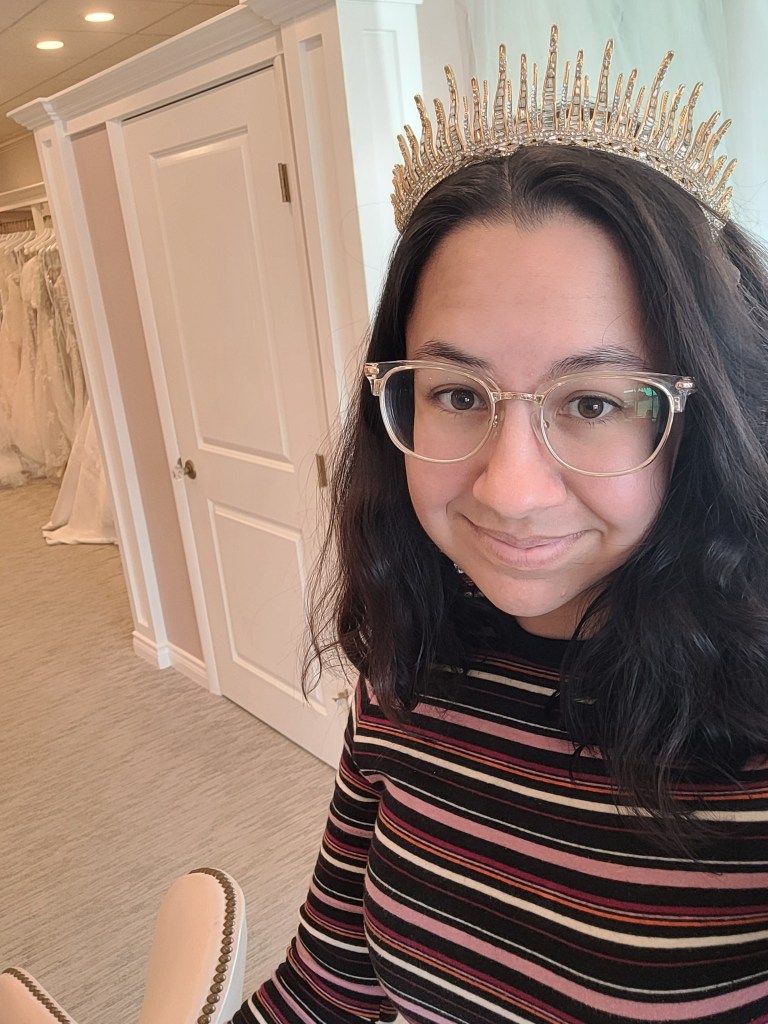
Stephanie Howard is a senior from Three Forks, Montana, who is double-majoring in literary studies and creative writing. Her writing has been featured or is forthcoming from Sink Hollow and The Albion Review. She enjoys gardening and being bad at video games.
 The Rocky Mountain Review