Kenzie Barkac
Fiction Runner-Up
Prologue
It was 11:30 p.m. in the ICU. I imagined if I held your hand tight enough, it would keep you from slipping away. I told myself that when given the chance to say goodbye, I’d ask you to stay instead. But, unfortunately, I didn’t. Rather, I told you that it was okay, that I didn’t want you to go but if you had to, I would understand. I told you that I loved you and that you were the best father a girl could have asked for. At 2:55 a.m., when the time came, you slipped away peacefully, your hand in mine. The nurses in the hall were popping popcorn and sharing cups of coffee over soft laughter. And at four in the morning, when my body finally met my bed, I knew the neighbors would still be asleep and that tomorrow would still come.
No one warns you about the continuous movement of the world when yours has suddenly stopped. As I stare at the ceiling from my bed, I think about crying. And then I think about not crying because what good would a few tears do? You would still be gone and I would still be here.
Act One
My body slowly rolls over to face the alarm clock on my side table. It hasn’t gone off yet, and the bright, bold letters read 6:15 a.m. I wait for the pain to come but it doesn’t. Instead, I lay in bed, completely numb to the world around me. Was it even real? No, it couldn’t be real. This weekend we will pile into your tiny one-bedroom house and play cards around an old, busted table as we always do. And when the night comes to an end, you’ll shovel piles of spaghetti into orange-tinted Tupperware before waving us off from your front porch, your dumb chubby French bulldog wiggling his butt at your feet. When Thanksgiving rolls around, you’ll walk in with a tray full of pickles and olives just before hovering over the oven to help make the turkey gravy. At the end of dinner, we will both rest our hands on our bellies full of good food and laughter. Just before dessert, we will reach up into the windowsill to grab the dried-out turkey wishbone from last Thanksgiving, replacing it with this year’s, and you’ll look at me with a smug smile spreading across your lips. Like every year, we’ll break the bone in half, more out of friendly competition than the desire to make a wish.
Maybe it’s the newness of it all, or the two hours of sleep that I’m running on, but I can’t bring myself to imagine a world you aren’t part of.
The sound of my alarm breaks me from my daydreams. I gather myself from the warmth of my covers and make my way to the kitchen, where I grab a cup from the cabinet and turn on the Keurig. I fill up the dog bowls, throw on a sweatshirt, and toss two slices of toast into the toaster before the smell of vanilla coffee fills my nose. It’s fifty-five degrees outside and a gust of wind throws brightly colored leaves up against the windows. Spreading raspberry jam across my now-golden slices of sourdough, I melt down into the couch cushions, pulling a blanket over my knees and gazing forward at a black television screen. Baloo, my soul dog, jumps up onto the couch and lays his head over my lap, repeatedly looking from me back to the toast again. Looking around the room, down at the coffee cup and plate of food, I realize that I’ve fallen into my daily routine and I’m not even hungry. Baloo enjoys both pieces of toast as I make my way back to my bedroom and cuddle my body up as small as I can make it. I don’t sleep. I just lie there, lifeless, thinking about all the things I wanted to do with you: go fishing in the spring, take you to a movie at the Babcock, watch the Super Bowl together. I make notes of all the things we were going to do together over and over in my head because that is the only thing I can do.
Act Two
Tears flood my eyes as I sit there, head twisted up in my husband’s jacket. He tightens his grip on me and kisses me on the forehead.
“It’s just not fair,” I say, slowly pulling away from him again. I can feel my chest tighten and my blood begin to boil. “I didn’t even get to say goodbye.”
Kaleb pulls me back into his chest, and I’m sure that even he, who always knows what to say, is at a loss. He knows it’s not fair and that there is nothing that can be said to make me feel better. The complications were made clear to me. A quadruple bypass is never an easy surgery, especially at your age, but I was assured that there was only a seven percent mortality rate. I spent eight hours in that waiting room for the surgeon to tell me that everything went well. And things did go well. So well, in fact, that they expected you would be able to leave the hospital in about three weeks.
Unfortunately, less than a week later, you had taken a turn for the worst, but the nurses never warned us of what was to come. All the way until your final hours, they believed that everything was going to be fine. Your kidneys were failing, but it was okay, they had said; they would just have to do dialysis and then everything would be fine. Well, it wasn’t fine. The last time I got to see you, you were sedated due to the pain. You stared back at me in a dazed state as I wasted my last conversation trying to make you laugh, teasing you about the upcoming game, and even making a remark about Taylor Swift and Travis Kelce. Had I known, I would’ve thought it all out, written everything down before coming to you, I would’ve made sure to articulate it in a way that I could get everything in, everything I needed to say.
Had I known, I would’ve thought it all out, written everything down before coming to you . . .
My tears slowly dry on my cheeks, and I reimagine our last conversation and then the conversations stolen from me by the nurses who sugarcoated your diagnoses. How could they not know? They had to know. They just didn’t want to tell me. They didn’t want to be the bad guy. No one wants to be the bearer of bad news. It’s their fault. Had they told me you were going to die, I would’ve said I loved you, but now you will never know. You will never know, and it’s their fault. The anger wells up inside me like smoke in a burning house. The curtains and sofa ablaze and large walls of flames blocking the door. Thick gray ash fills my lungs until I can’t breathe, but I stand there in the middle of the carnage not even attempting to escape.
“It’s okay to be angry,” Kaleb says, hours later, sitting across from me at the dining room table. “Just don’t let it consume you. He wouldn’t have wanted that.”
At that moment I picture Kaleb outside my burning house, carrying buckets of water to my aid.
Act Three
The days pass and the sky begins to grow darker earlier, as if it intends to swallow me up. The doorbell rings, sending both dogs into a chaotic dance at the front door. My sister walks in and embraces me in a silent hug. We sit for what feels like a full hour in the dim light of my fireplace before she says anything.
“How are you feeling?” she asks, trying to hold my gaze, but I look down at my lap instead. It’s a dumb question, really. I’ve spent the last week hearing those questions, questions like How are you doing? Are you okay? Can I do anything for you? Part of me wants to hate those questions, but I can’t because I know there simply isn’t anything else to say.
She knows exactly how I am feeling, and even though I feel like the world around us has turned forever dark, I answer, “I’m okay. You?”
She nods back at me, and we’re once more absorbed into silence. Even though we are both thinking it, I know she will never say it. These are the thoughts that keep us both awake at night, the would haves and could haves. Would things have been different if we had insisted on you not living alone? Would you have chosen to forego surgery had we told you about our concerns? Would you still be here if we hadn’t been so trusting that things were going to be okay? These thoughts swim through my head in circles, almost driving me mad, but I don’t say it. I don’t ask her those questions because I know she is thinking them, too. Neither of us are willing to admit it; we both share the same prison cell of the possibilities that might have kept you alive.
Act Four
I miss you the most in the car on the way home at night. The darkness of the sky only confirms the feeling of loneliness that has settled deep into my chest. The streetlights send white and red streaks across my vision, now blurred with the tears that seem to come like clockwork every night. A never-ending sadness has found a home within my soul like a clingy unwanted tenant. I imagine my tenant as an elderly woman with rail thin arms covered in blurry tattoos, wearing clothes that draw attention to her sunken collarbones and ribcage. “Squatter’s rights!” she yells back at me as I attempt to drag her baggage across the barrier and out the front door. Growing tired from our game of tug of war, I slip past her to make a pot of coffee for two. We sit together in silence, sipping from glass mugs. It’s interesting how sadness starts out as a small annoyance and then somehow festers itself into a simple state of being.
From the driveway, I peer through the front window to see Kaleb in the kitchen, presumably making dinner. When I enter the house, he embraces me, and I can feel him trying to take some of the weight off my shoulders. I try to bury the sadness down deeper, hoping he won’t notice the redness in my cheeks or the puffiness of my eyes.
“You okay?” he asks as a look of concern stretches across his face when he finally has a second to take me in. Damn it. I sigh and nod, not having the energy to talk. Lately, I don’t have the energy to do anything—cook, clean, shower, work out. Half the time, Kaleb has to force-feed me just to make sure I’m eating. I put my stuff down and retreat to the bedroom, hoping sleep will save me.
I hear his footsteps follow me, and I don’t even turn around before saying, “I can’t talk about it tonight, Kaleb. I know you are just trying to help, but I can’t do it. I just need to sleep, and then I’ll be fine in the morning.”
I hate myself for pushing him away, but I would hate myself even more for allowing him to absorb my sadness. I shut the door between us and climb into bed, pulling the covers up over my ears, and, eventually, drift off to sleep. It seems like only moments later, I feel Kaleb pull me into his arms as I sleepily feel wet tears on my face and instantly realize it has happened again: the dreams. All my dreams of you.
“It’s okay, I’m here,” Kaleb says, “I will always be here.”
With that I realize that the only tenant that I need is the one already living with me, the one who continues to check in on me even when I push him away, even when the pain makes me mean and nasty, even when the dreams and tears catch up to me at two in the morning. I know I can’t just wish the sadness away like an unwanted tenant, but I imagine my scrawny tattooed elderly woman finally packing her bags and making her way out my front door.
Act Five
It’s been months and I have finally decided that it is time to bring you home. So, I packed a bag and got on a plane, and we flew across the country just as you wanted. Feeling the sand under my toes and the warmth of the setting sun on my shoulders, I glance off into the pink and yellow sky. It seems like just yesterday that I sat here talking to you about everything and anything. You really were the best listener and somehow always knew exactly what to say to make things better. I’d give anything to have one last conversation with you. One last hug, one last I love you, and more than anything one last trip around the sun. I imagine someday, when I’m old and gray and my time has come, you’ll be waiting for me. Ready to walk me home just like I walked with you on your final night.
A lighthouse stands off in the distance, and I look over at the dark blue urn tucked into the sand next to me. I slowly reach for it, twisting the lid off before taking a handful and tossing it to the wind. I sit for more than an hour, until the sky is so dark that I can barely make out where it meets the waves. Bright stars illuminate the lighthouse, and I can hear laughter from the arcade on the pier. You were my world, and while losing you seemed to stop Earth straight on its axis, the world moved on. Somewhere along the way, I began to move with it. It doesn’t hurt like it used to, but sometimes I still find myself in tears wishing you were here, wishing I could tell you about my day or ask you to make a pot of your famous spaghetti. I like to think that you’re up there playing with your favorite dog and spending time with Grammy. I like to think you’re happy. I stare up at the moon and smile. I think I have finally found it, Dad. I have found peace.
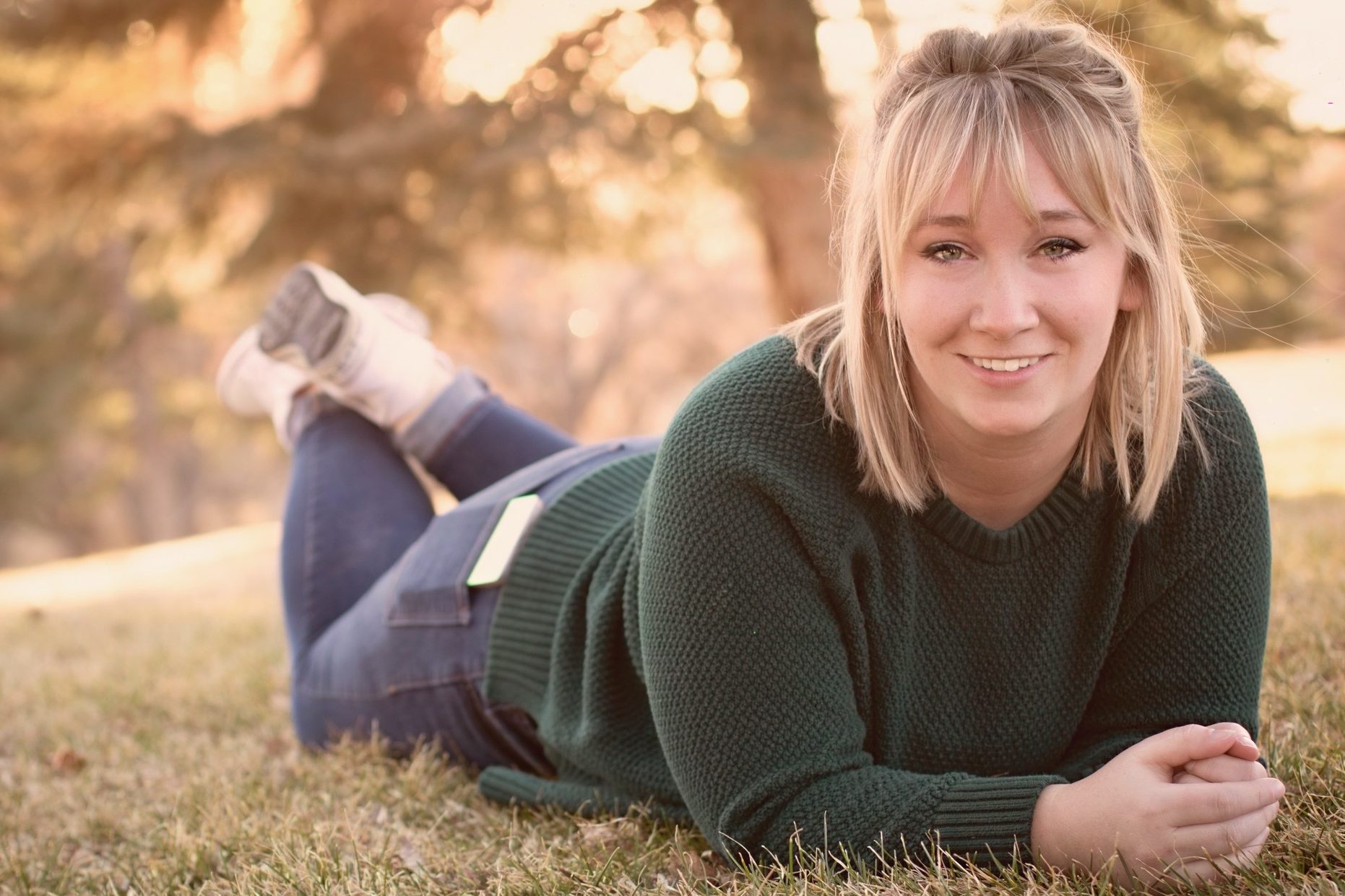
Kenzie Barkac is a sophomore double majoring in psychology and creative writing. She is from Doylestown, Pennsylvania; trained her dog to be a certified therapy dog; and recently attained her scuba diving license. She hopes to swim with sharks soon.
 The Rocky Mountain Review