Amber Balzer
Fiction Winner 2025
War changes people. At least, that’s what I’m told. People say war turns good men into tyrants and strong ones into cowards. But I don’t think that’s true. War doesn’t change people any more than a marriage or a death in the family. It only emphasizes what is already there. Tyrants were always tyrants, but they could quell it with everyday delegation in the family or the field. Cowards were always cowards, but they never had to turn and run until their lives were on the line. I always thought I was a patriot above all else. But the war showed me who I was all along.
It was 1863. The bite of October air tousled my hair through the ties at the head of the tent. West Virginia’s autumn chills hardly compared to the frozen rain our company endured in the Pennsylvania trenches back in February. My hands may have told another story to an unsuspecting passerby. They shook with the effort it took to reach to the cot beside me and lift a crinkling piece of parchment from the wool. But I didn’t shake from the cold. The page, folded and creased in a few spots, hid its contents from view, save the occasional stain of ink that bled through. Moments of pause, forever imprinted in time, smeared by dusty fingerprints.
Captain Mattingly had waved me down after midday patrol the day before. I tugged on the strap of my rifle as I approached him, resting it against my shoulder blades. “The pickets are secure, sir. Nothing out of the ordinary, just that irate farmer and his obsession with Davis.”
Mattingly’s nose wrinkled at the mere mention of the Confederacy’s so-called “president.” I still remember the passionate way my brother once spoke of it. If the Confederates were so revolutionary, they wouldn’t need to copy everything we do. Why not call the man a king or a dictator? Why did he have to be “president?” The Captain’s eyes turned east. “Courier came through today.”
The abrupt shift brought me pause. “Is it from McClellan?”
“No.” He shoved an envelope into my grasp, “Don’t let yourself get distracted, McAlister.”
“Of course not, sir.”
His warning passed over my ears like the midday breeze when he spoke it the first time. Distracted? Me? He must have forgotten he was speaking to Walter McAlister. Perhaps he confused me with one of the other soldiers.
Now, I gazed down at the hasty scrawl addressing the letter to me. Fitz (Walter) McAlister. Bulltown, WV. If the script didn’t give it away, the return address would: Norman McAlister. Middlesboro, KY. Mother only ever wrote with the practiced ease of years’ worth of letters under her thumb. I could often see the strain in her letters, the pen held just too tight, certain lines just too thin. But her letters swooped and flowed together like a piece of art.
Not Norman’s.
Norman’s letters spilled like swirls of black ink on the page. As if the pen couldn’t move fast enough to keep up with his rebellious thoughts. When we were children, Norman and I would sit on the dirt in front of the school building, watching a top spin and whirl and dance like Norman’s penmanship, until it finally skidded to a stop. “He is an excellent mathematician, Mrs. McAlister,” the teacher would say. “If only I could read how he found his answers.” The conversation happened at least once a week. Mother bought him a journal to practice in. An expensive one with a leather cover.
He gave it to me the week before he left for the war front, nearly empty. I never understood why; my handwriting never exceeded his abilities. The journal rarely moved from the bottom of my pack. Sometimes I would pull it free for a moment of respite from the war, so I could trace the swoops in his lines and pretend they were written by a top. It was a verse out of Genesis somewhere. Something about being my brother’s keeper, whatever that meant. I’d heard nothing else from him since then.
I finally peeled the folded page apart. It crinkled. I winced and unfolded the crease just a bit slower so I wouldn’t wake anyone. The lantern beside me cast a gloomy glow on the page as I began to read.
October 3, 1863
My dear brother,
It pains me, looking at the stack of letters before me, to realize how long it has been since I sent my words your way. Please believe me when I tell you I have found great comfort in them in the midst of everything. I pray mine will offer you the same. I am overjoyed to hear that Mother is in good health. Regarding your high marks and honors in your company, allow me to extend my sincerest congratulations. I could think of no one more deserving.
Of course, I cannot feign delight about your enlistment, though the news came as no surprise. You have always been bold and steadfast in your convictions, and after all, I could offer no chastisements that would not be easily turned upon my own decision to do the same. You say you’ve been stationed in West Virginia. While I’ve not had the pleasure of seeing the hills or the rivers you’ve so detailed, your descriptions are such that I can imagine their beauty—consider this my official statement of envy. Yet, I will soon have the opportunity to see them for myself. I am to arrive near your post in less than a fortnight.
“No.” The whisper fell from my lips of its own accord. Here? He was coming here? My fist wrinkled the edge of the page. As boys, we were inseparable. Wherever Norman went, I followed, a puppy at his heels. Things changed in the months before he enlisted. He spent more time away from home and abandoned Mother and me to tend our small cornfield on our own. Norman would admire bullet casings with his friends and snatch them up whenever I stumbled across their gatherings. Yet, he still wrestled with me for the first serving of breakfast every morning, and he still laughed with Mother and me over our evening meals.
The date marked in the letter’s upper right corner had come and gone ten days ago now. Would he pretend the last two years of silence didn’t happen? Would he tell me he was proud of me? Those questions ought to have sparked two different sensations in my heart, but they didn’t. I scrambled my eyes toward the final paragraph of the letter. I must ask a favor of you, and I beg—
A shrill yell knifed through the air. “Positions!” came the voice. “To your positions! To the northwest fortifications!”
A shrill yell knifed through the air. “Positions!” came the voice.
In my haste to stand, the letter fell to the dirt. The familiar warmth of adrenaline crawled through my veins. We always knew this possibility existed. It’s why they stationed us here, to be welcomed by only a few farmers and an old church. Messengers often passed through Fort Bulltown to the battle lines in the valleys west of us. Working ants emboldened by the mission to take crumbs of orders and information between our fighting companies and the commanders in the east.
I picked up the letter from the ground, dusted it off, and tucked it in between my jacket and shirt. Men around me scrambled to pull their boots over ankles swollen with sleep and blinked their bleary eyes into focus. On my way out, I shoved my cap on my head and my gun over my shoulder. Shadows in my periphery flashed by, my company moving in unison toward the armory, then to the makeshift wooden barriers surrounding our camp. In moments like this, we didn’t have time to think. Not about fear, not about the possibility of death or the tragedy of standing off against people we knew. But I thought all the same. In the glow of the early morning, dew pulling at the laces of my boots, I thought of Norman marching away to war despite our mother’s wishes with a musket slung over his shoulder and a hat slipping off his head. I remembered his rifle fashioned with a Malcolm scope, the newest, shiniest modification I’d ever seen.
Lord protect him if he arrived this morning, straight into an ambush. I took only a moment to spin my gaze toward the rest of the soldiers setting up behind the wooden posts marking the edge of Union space. Some settled into the trenches we spent the last few long weeks boring over. But I made for the church. The door, ajar, beckoned my steps. I’ve heard many civilians chastise us for using the Lord’s ground for bloodshed. I’m a spiritual man myself, and I just can’t imagine He would be opposed to reckoning freedom for the slaves. In successive columns of their own fortifications, the pews beckoned me into the spiral staircase of the bell tower.
My feet pounded against the creaking wood of each step. I spun my rifle’s strap to whip the weapon forward from its steady posture against my spine. My teeth ripped the casing of the cartridge open and the paper fluttered down the stairs behind me. Powder spilled from my fingers into the barrel. A bullet hopped from my pocket. My rifle clicked.
The moment the crisp petrichor outside filled my nose, I let my knees fall. They scuffed across the notched stone surface of the belfry and sent a buzz up my legs. My spine tingled with the familiar numbness of anticipation. The stock cushioned my shoulder. Cold metal smoothed down my left hand. Then, kneeling at the precipice, my rifle in my grasp, my gaze in my own Malcolm scope, everything went still. Even the wind held its breath.
Somewhere along the pickets marking the edge of our fortifications, Captain Mattingly yelled, “Load and ready!”
I spared the other soldiers a glance through my scope, their practiced movements clean and synchronized with the first command. Then, panning my gaze, I could see the Confederates huddled in the blanket of protection offered by the forest on the other side of the river. A hundred yards away, maybe. Most battles I witnessed were close quarters like this. Aim low. A command uttered nearly as often as the order to fire. I never needed the reminder.
A month or so before he left, Norman snatched me away from my bed on an early morning quite like this one. I remember stumbling after him, complaining about the cold and the little rocks working their way through a hole worn into my right shoe. He ignored me, and we only stopped after a convoluted trail of twists and turns brought us to a clearing in the forest at least fifteen minutes from our farmhouse. While I plopped down in the dirt to pick a stone from my heel, he crossed the space to throw a rope up over a tree branch. He laced the rope once, twice around the neck of one of the hand-sewn dolls the girls fawned over at the market. I watched her sway back and forth from the noose he fashioned until he appeared in front of me and pressed his musket into my gangly adolescent hands. “That’s your enemy’s head. Shoot it.”
Dumbly, I gawked at him, and I didn’t grab the gun. “Mother said—”
“I don’t care what Mother said.” His tone came sharp and punctuated another forceful shove of the gun at my chest. “Shoot it.”
“But I’ve never shot a gun before.”
“That’s the point.”
Soon I’d learn the proper posture, and the comfort of a gun at my shoulder would become a third arm. But my first time holding one, I suspect I looked like a rich man handed a gardening tool. Norman’s callused fingertips dug into my wrists with each adjustment to my grasp. My arms shook with the effort it took to keep the heavy weapon upright. Then, he moved behind me, and he tugged the stock to my shoulder. A softer hand coaxed my eye down to the rod of metal fashioned to the top of the barrel, and I saw the button eyes of the doll.
The first shot landed in the bark of the tree. I nearly dropped the rifle in my effort to rub the spot it bucked into my shoulder, but Norman caught it. “We’re too close. Don’t aim where you want to shoot.”
Where else was I supposed to aim? “That doesn’t make sense,” I grumbled.
“Well, it’s how it is.”
We spent much of the brisk morning practicing. He scolded me each time I missed, but clapped my back when the first bullet surged through the carefully stitched dress the doll wore. We dragged ourselves back home only after I shot her a second and third time, and though Mother eyed us with a creased brow, she never asked where we’d been.
“Aim!”
The shout brought me back to reality. With precise movements, I lifted my gun a few inches higher. My right eye slid closed as if that simple gesture could provide the left with more strength. Drawing on two years of training, and even longer spent at Norman’s heels in the cold dead of night, I dragged my gaze through the shadows in the trees. The sky above the trees swam with the inky blackness of the stains in my brother’s letter, and the rising sun on the horizon offered subtle assistance. Every shimmer, every glint of metal exposed a soldier’s position in the undergrowth. One such glint snatched my focus, not from the ground, but from the thick branches and leaves dangling above.
I didn’t aim where I wanted to shoot. Steadying my rifle, I locked onto the soldier’s slate gray shirt. The buttons reflected the morning’s blue glow in circular patterns that licked at the wooden stock and the thin scope attached to his respective musket. He shuffled, and for a moment, my line of sight caught his cropped dark hair and the shimmer of metal frames resting on his nose. A defiant, informal hat threatened to slip off his head and into the bushes below. Doubt crawled up my spine even as an uncomfortable sense of familiarity turned my veins to ice. I shoved the scope away from my eye and shook my head. It was early. I was tired, and the letter from my brother consumed my thoughts. Don’t let yourself get distracted, McAlister. I shook my head again, took a steadying breath, and returned to my scope. I had to focus.
Doubt crawled up my spine even as an uncomfortable sense of familiarity turned my veins to ice.
I twisted the dial near the end of my scope and returned my eyes to the soldier in the trees, aiming for the buttons at his shirt. The barrel of his gun, and his pale, dusty cheek as he turned his head my way were illuminated by the first sliver of sunlight from behind me. My captain’s warning drifted off into the distance where my breath went only a moment ago. Everything else did too.
“I could think of no one more deserving.”
He didn’t intend to bid me farewell the morning he left. The strike of the match pulled me from sleep first, then the rustle of his blankets, and the shifting of his silhouette moving through the room. Boots clipped on the wooden floor. The metal of his gun strap rattled against the rifle as he lifted it from under the bed. I don’t think he would have hesitated if Mother wasn’t waiting for him outside our room.
“This isn’t what your father would have wanted.”
I watched his shadow on the wall cast by the low glow of the lantern. His stance straightened, and he shook his head. “Father isn’t here. He can’t tell me what he wanted.”
“That isn’t fair, Norman.”
“Life isn’t fair. Isn’t that what you always told us?”
I heard her sniff. The only time I remember Mother crying before that was Father’s funeral, and I was young. “This isn’t right.”
“Norman,” I called, and my voice wavered enough to prompt his return.
He didn’t linger any longer than it took to tug the blankets back up over my chest and squeeze my shoulder. “Look after her, all right?”
“But where are you going?”
“I’ll write. Goodbye, Fitz.”
I never knew what “wasn’t right.” The empty notebook he left on my blankets served a burning reminder of his farewell. He didn’t uphold his promise to write. But now, I had the sinking feeling I knew the answer. On the Confederate side of the river, a sharpshooter in the tree, swept up in a march on a strategic Union position. My position. And the shining barrel of his gun, the gaping maw of its opening, stared right at me. Just like mine gazed at him. Don’t get distracted. He’s a Confederate. Don’t get distracted. He was my enemy, and I needed to shoot him, just as he taught me.
But I knew this enemy.
Norman.
My finger slipped off the trigger, abandoned it to the brisk morning air.
“Fire!”
A cacophony rang out across the field, shocks and crackles of gunshots released in rapid succession from both sides of the river. Flickers of light glittered from struck gunpowder as if they hastened the sun’s climb up the horizon. Something slammed into my side. With fumbling hands, I strained to lift whatever weight sent me to my back and settled on my abdomen. I grappled at my stomach and my fingers came back soaked with crimson.
Oh, Lord.
My chest shrank to the size of a pebble as I tried to push myself up to assess the damage. Maybe it was just a flesh wound. I was awake, after all, and Norman was too good a shot to pierce me clean through accidentally. But the moment the muscles of my middle strained to help, an icy heat pulsed toward my neck and down my arms to my fingertips. I hit the stones again with a guttural sound. I couldn’t believe the choked, strained moan came from my throat. A sound I heard from dying men, from fellow soldiers who’d just lost limbs. Not me.
*
I don’t remember closing my eyes. I must have, because the gradient of the sky faded like a memory, replaced by stale gray canvas stretching above. The entire world pounded in my head. Cold tang and alcohol burned my nose, and the sickly sweet smell of old drying blood. Rhythmic thrums, over and over and over. A scratchiness beneath my fingers and something tight around my abdomen. The only light offered came from a candle on a three-legged stool beside my cot. A canteen stamped with the stars and stripes of the Union flag rested atop a folded piece of parchment beside the glow. My breath caught. I slapped my hand out to snatch the page up and sent the canteen swaying and clattering to the dirt. The pain of the sudden movement would have crippled me, had I been standing. But I didn’t care. The parchment, stained with ink, stained with crimson, crinkled in my grasp as I unfolded it. I scrambled my eyes toward the final paragraph of the letter. There had to be an explanation for this.
A gaping red hole cut through the page and stole away most of the words. I must ask a favor… October the 13th… be elsewhere… if not for your sake… You must leave. The solitary farewell at the end of the page remained untouched.
Your loving brother,
Norman.
“Fitz.”
Startled, I shot my gaze in the direction of his voice. Hovering beside me, resting on the bed, a figure cloaked in gray with a crooked hat on his head. “Norman.” I wrestled with my arms in an effort to get them underneath me so I could sit up and look at him. “What—what are you doing here?”
An uncomfortable pause filled the emptiness. Even the rustling of the blankets as I shifted didn’t dare to break it. “I just wanted to make sure you were okay,” he told me.
My throat felt smaller than usual. “Right.”
“Yeah.”
Gray canvas. Gray clothes. Gray light cast by a gray candle onto gray faces. Something told me even the sky outside would be gray instead of its typical vibrant blue. “I could call my troops on you, you know.” The words slipped like a bullet off my tongue.
“I know.” He hardly shrugged.
At least we had that much straight. It might have been the only thing we had straight.
“I never wanted you to join the war,” Norman said in a breath.
“And I never wanted you to end up a slaver, but look where we are.”
“Fitz….”
“Don’t.”
He didn’t.
I crossed my arms. My elbow came to rest right above the bandages, and I winced, but I didn’t let it faze me. I didn’t let anything faze me. Nothing else mattered, did it? “Well?”
He inhaled, and his gaze fell away. “It’s a long story.”
“We have—”
“We don’t. I’m expected to rendezvous with my company by dawn.”
I scoffed. “Of course you are.” Because of course he was. Of course he would come see me after the ambush and pretend nothing happened. Of course he had to return to his responsibilities. Of course I would have done the same thing, if it were me instead of him and him instead of me. “Can you just tell me one thing?”
“It depends.”
“I’m your brother, Norman.” The question asked itself.
I thought Norman’s gaze might break like glass faced with too much strain. I almost glowed at the prospect of him hitting his knees to beg for forgiveness. But he didn’t. Instead, his jaw shifted and the melting stone behind his gaze hardened. He rose from the edge of the bed and towered over me, picturesque strength and virtue, despite everything. But his hat still threatened to slide off his head, and his glasses hung off the edge of his nose. He pushed them up. He touched my leg with one last warm, lingering reminder of what used to be. Then, he stepped back. “Go home, Walter.”
When he turned, I let him go. I didn’t call after him to stay. I didn’t beg for his apology any more than he begged to offer it. The flaps of the tent parted like an audience for its king, and without another word, without so much as a glance my way, my brother left. In the silence, my wandering eyes trailed to my arm on the bed beside me, the bandages laced around my abdomen, the blankets bunched at the foot of the bed, and atop the sterilized blanket beneath me, a page. A folded piece of parchment with ink stains and bloody fingerprints, and a hole the size of my thumb in the center.
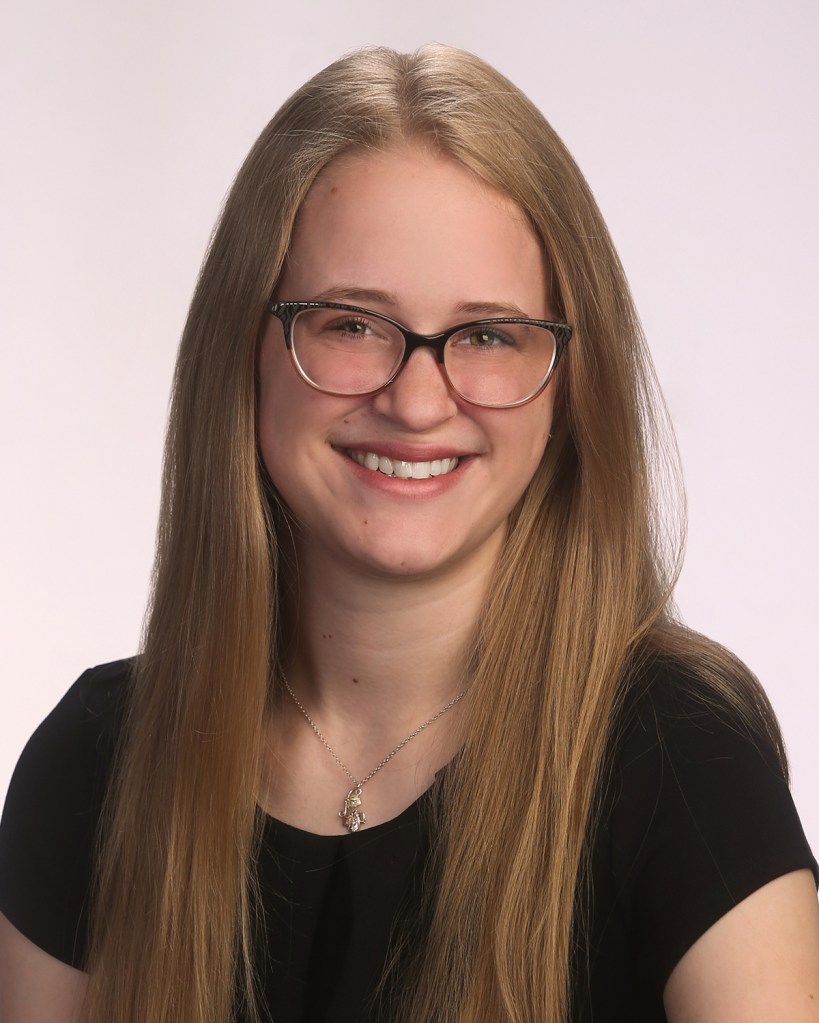
Amber was born and raised in Cheyenne, Wyoming, and is currently a senior at Rocky Mountain College in Billings, Montana. She enjoys finding the deeper meanings to life and everyday things.

